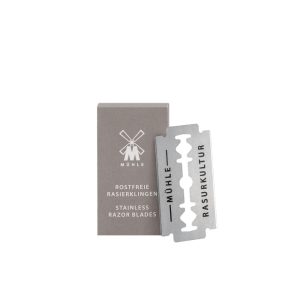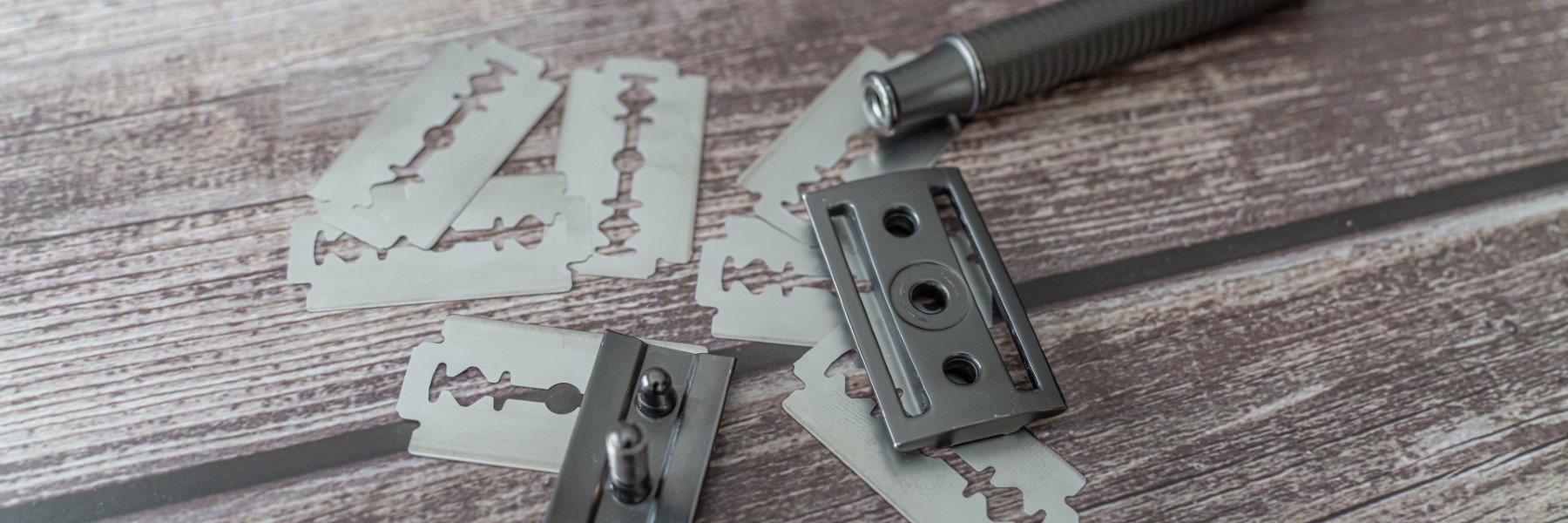
Most modern razor blades we use today are made of stainless steel. It’s a great material that revolutionized shaving because, unlike the old carbon steel, it doesn’t rust as soon as it sees a drop of water. But that a razor blade is “stainless” is really only half the truth when it comes to shaving performance.
Just because the steel on the razor blade does not get brown rust stains does not mean that it is unaffected. On a microscopic level, the razor-sharp edge is extremely vulnerable. As soon as you start using the razor blade, it is exposed to both mechanical wear from hairs and chemical attacks from water and shaving soap. The “stainless” surface is actually just a base; The real magic behind a soft shave is in the microscopic coatings that manufacturers place on the outside of the razor blade – such as platinum, chrome, Teflon (PTFE) or ceramic.
The steel itself gives the blade its strength and rigidity, but it’s these invisible layers, thinner than a hair, that determine how the razor blade actually glides against your skin. Many people think that a blade becomes dull because the metal wears down, but the truth is that it is often the coating that gives way or is covered in deposits first. When the protective layers are damaged, the blade begins to “chop” and tear, although the steel underneath is technically still sharp.
Understanding how to care for both the steel and its delicate surface treatment is the key to a more comfortable shave and longer life of your razor blades. Here are 4 tips to protect your coating and stay sharp:
What exactly is stainless steel?
Stainless steel is an iron alloy that contains at least 10.5% chromium. When the chromium comes into contact with oxygen, an invisible, microscopically thin film of chromium oxide forms on the surface of the steel. This film is called a passive layer and acts as a protective shield that prevents oxygen and moisture from penetrating and causing rust (corrosion) in the metal of the razor blade.
Unlike ordinary carbon steel, stainless steel can “heal” itself; If the surface of the razor blade is scratched, a new protective film is created directly in contact with air.
What are the different coatings?
The coatings are microscopic layers that are laid on top of the stainless steel to give the razor blade specific properties. Here are the most common ones:
- Chrome (Chrome): Basic protection that hardens the edge and provides extra resistance to corrosion (micro-rust).
- Platinum (Platinum): A precious metal that makes the edge more durable. It helps the blade retain its shape longer without “folding” when in contact with coarse beard hairs.
- Teflon (PTFE): A lubricating coating that reduces friction against the skin. It is this layer that makes the blade feel “soft” and does not bite.
- Ceramic: An extremely hard coating that is often used on the sharpest blades to provide an exceptionally long life and heat resistance.
Often these are combined (e.g. Chrome-Platinum or PTFE-coated) to create a balance between aggressive sharpness and gentle glide.
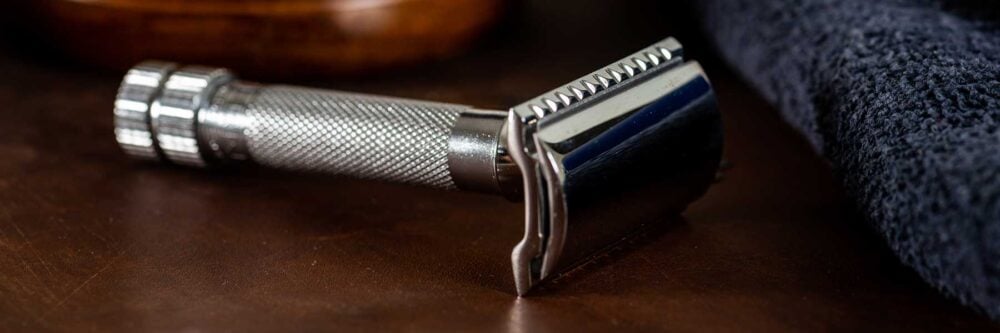
1. Cleaning: Rinse the razor blade thoroughly, but never touch the edge
It’s easy to think that wiping it down with a towel or paper after use is doing the razor blade a favor, but for a modern double razor blade, this is the quickest way to ruin the sharpness. The reason lies in how the different coatings are constructed:
- Sliding coatings (Teflon/PTFE & Polymer): These act as a microscopic “lubricating film” on top of the steel. They are extremely soft and sensitive to mechanical friction. If you rub the blade, even with a soft towel, you will literally peel off this slide bearing. The result is a blade that “chops” and pulls on the beard hairs because the low friction has been lost, even though the steel underneath is still technically sharp.
- Curing coatings (Platinum & Chrome): These layers are harder, but they are applied with atomic precision. When you dry the edge, you risk creating microscopic chips in the coating. These irregularities then act as attachments for limescale and soap residue, which makes the blade feel rough already on the next shave.
Do this instead
Rinse the razor under running warm water. If you have a safety razor, you can loosen the head half a turn to allow the water to flow freely between the blade and the base plate. This is enough to remove hair, sebum and soap residue without compromising the delicate surface. Finish by shaking the razor vigorously to remove the last drops of water.
2. Drying: Protect the edge from invisible minerals
When we talk about modern razor blades with a Platinum or Chrome coating, it is rarely rust that is the biggest enemy in daily use. Instead, the biggest threat is what remains when the water evaporates: lime and minerals.
These coatings are extremely smooth at the molecular level to reduce friction. But when a water droplet is allowed to dry slowly on the edge, it leaves behind microscopic limescale deposits. These act as small, hard “thorns” along the entire blade. The next time you shave, it’s not the metal that meets the skin, but an uneven surface of limescale that tears and creates irritation.
- Hardened coatings (Chrome/Platinum): These are particularly vulnerable because they are designed to be hard and durable. The lime adheres well to these surfaces and can actually build up a layer that makes the blade feel “dull” after just two shaves, even though the edge underneath is intact.
- Soft coatings (Teflon/PTFE): Here, the limescale can actually contribute to the coating peeling faster, as the minerals penetrate microscopic pores and “lift” the Teflon layer when they dry.
Instead, do the following:
Shake the planer vigorously sideways after rinsing it. The goal is to remove the large water droplets that are still hanging on the edge itself. If you live in an area with hard water (a lot of lime), this step is critical. Some people also choose to dip the leaf in distilled water or alcohol (see tip 4) to ensure that no minerals remain. Remember: let air dry, never towel dry.

3. Storage: Protect the ceramic edge
Many people see the shaving rack as a pure interior detail, but for a modern blade with special coatings, it is a critical tool for maintenance. It’s all about protecting the blade from both physical shocks and the hidden corrosion in the bathroom air.
- Ceramic/Chromium-Ceramic coatings: Ceramic is used because it is one of the hardest materials available, which means that the edge keeps its sharpness for an extremely long time. But ceramics have a weakness: they are brittle. If the planer is loose in a drawer or cabinet and bumps into other objects, microscopic pieces of the ceramic edge can “chip” loose (so-called micro-chipping). You don’t see it with the naked eye, but you immediately feel it as a leaf tearing and scraping.
- Thin metal coatings (Platinum/Chrome): These layers are so thin that they are porous at the molecular level. If the planer lies flat against a damp surface (such as the edge of a sink or shelf), a capillary effect is created where water is sucked in and remains hanging under the blade. This creates a perfect environment for corrosion that eats into the coating and causes it to flake.
Instead, do the following:
Invest in a straight stand where the razor can hang vertically. This ensures that:
- Air circulation is maximum around the entire blade, which means that moisture evaporates before it can damage the coating.
- The edge is protected from contact with other hard surfaces that may damage the brittle ceramic layers or soft Teflon surfaces.
- Fluid runs off downwards instead of collecting in the planer head, reducing the risk of deposits between the blade and the planer.
4. The dip: Alcohol to "reset" the coating
The absolute best way to care for a blade with Chromium, Platinum or Teflon is a quick dip in isopropanol (alcohol) after rinsing and shaking off the razor. This step is not just about hygiene, but about chemically protecting the thin layers that make shaving soft.
- Dissolves organic residues (Teflon/PTFE): Teflon lube coatings are “grease-loving” (oleophilic). This means that they absorb microscopic residues of skin oils and shaving grease that water cannot handle. These residues form a tough film on top of the coating that makes the blade feel dull and “slows down” against the skin. The alcohol effectively dissolves these fats and leaves the sliding surface completely clean.
- Expels moisture (Chrome/Platinum): Alcohol has a lower surface tension than water and evaporates at lightning speed. When you dip the leaf, the alcohol penetrates the microscopic pores of the chromium or platinum coating and expels any remaining water molecules. Since the alcohol evaporates immediately, no water stains or limescale have time to form on the delicate edge.
- Prevents “Tea Staining”: On stainless steel blades, small brown spots (so-called tea staining) can sometimes appear where the blade meets the razor. This is not necessarily rust in the steel, but reactions in the thin surface layers. The alcohol dip breaks the chemical process and keeps the blade in mint condition.
Instead, do the following:
Keep a small jar of isopropyl alcohol (at least 70%, preferably higher) standing in the bathroom cabinet. After rinsing the razor, just dip the head itself with the blade into the jar for a few seconds. Shake off and place the razor in its rack. The blade becomes sterile, completely dry and the coating is ready for a perfect shave next time.
More things to consider
Does it matter if I rinse in hard or soft water?
Yes, it does play a huge role. The difference between hard and soft water is actually one of the most common hidden reasons why a razor blade feels “dull” after the first use.
Here’s why it affects the rinse and your blades:
- Hard water: The lime that “grinds” down the edge
Hard water contains high levels of minerals, mainly calcium and magnesium. - Soap Scum: When you rinse the razor in hard water, the minerals react with the shaving soap to form an insoluble, sticky film (lime soap). This film settles like an armor over the blade coating (especially on Teflon/PTFE). This means that the blade does not slip, but instead “brakes” against the skin.
- Microscopic “thorns”: When the last drops of hard water dry on the stainless steel edge, they leave behind hard lime crystals. These crystals are actually hard enough to scrape against the skin and destroy the chemical coating on the blade.
- Soft water: Better glide, harder to rinse
Soft water has low mineral content, which is gentler on the leaf but has its own challenges: - More effective cleaning: Soft water dissolves shaving soap and sebum much more effectively. This means that you can more easily get the blade completely clean of residue that would otherwise stick to the Platinum or Chrome surface.
- “Slippery” results: Since soft water does not form limescale soap, the natural glide coating of the leaves is maintained for much longer.
- How does it affect your routine?
If you live in an area with hard water (common in e.g. Uppsala, Gotland or Skåne), the tips on drying and drinking alcohol become even more important: - Rinse longer: You need more water flow to break down the tough residue formed by hard water.
- Forced drying: You cannot let the blade dry itself with water droplets on, as the limescale is guaranteed to stay on the edge. Shake off the blade extremely thoroughly.
- Alcohol saves you: Isopropanol (tip 4) is your best friend in hard water areas. It “rinses away” the mineral-rich water from the leaf before the lime has time to precipitate and dry solid.
What should I do if I cut myself with the razor blade?
When you cut yourself while shaving, the skin barrier is broken, and your razor blade goes from being a trimming tool to becoming a medical instrument that has come into contact with blood. This places completely different demands on hygiene to avoid infections or irritation at the next shave.
Here’s what you need to keep in mind:
- Disinfect the blade immediately
If you see blood on the leaf, it’s not enough to just rinse it in water. Bacteria love the warm, humid environment of a bathroom and can thrive in the organic residues (blood and skin) that stick to the leaf.
Proceed as follows: After rinsing the blade clean of visible blood, use isopropanol (alcohol). As we mentioned in tip 4, a dip in alcohol is by far the safest way to sterilize the leaf and kill any microorganisms. - Also clean the planer (not just the blade)
Blood and wound fluid can find their way behind the blade and get stuck on the razor’s base plate or in the threads. Proceed as follows: Unscrew the razor completely after shaving. Clean all parts with warm water and soap, and finish by wiping them with alcohol. This is especially important if you have a safety razor where blood can dry into nooks and crannies that cannot be reached during a regular rinse. - Consider changing the blade right away
Even if the blade has only been used once, it may be wise to discard it if you have cut yourself properly.
Why? A wound is often caused by the blade having a microscopic damage (a “burr” or unevenness in the coating) that you can’t see, but that the skin feels. Continuing to use a blade that has already caused a wound increases the risk that you will tear open the same wound again next time. - Bloodstoppers – keep them clean
Do you use an alum stick or alum stone to stop the bleeding?
Method: Always rinse the alum stick under running water after it has been in contact with the wound, and allow it to air dry completely before attaching the cap. If you use an alum stick directly on a wound and then put it away moist, bacteria can survive on the surface. - Wait for the next shave
This is the most important tip for healing.
Method: Give the skin time to form a stable crust. If you shave the next day in the same place, the blade (no matter how sharp and clean it is) will shave off the new, thin skin. This creates a vicious cycle of irritation and potential infections (folliculitis).