
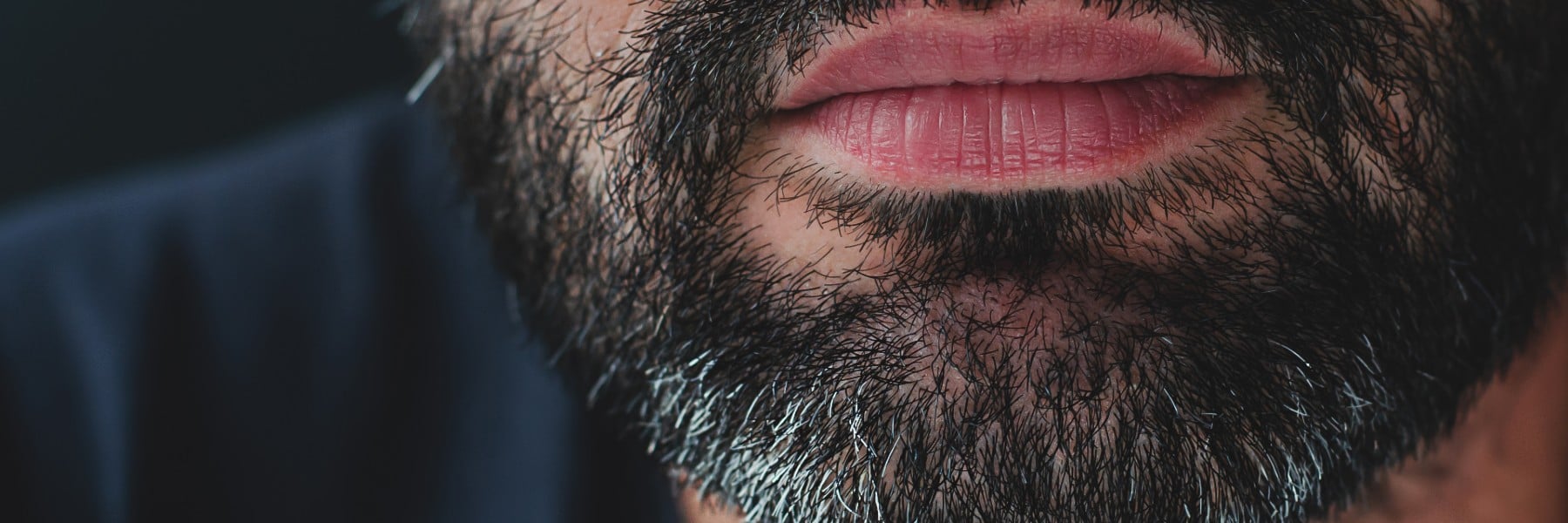
How to fade away gray hairs for a fresh and natural look.
Have the first grey hairs started to appear in your beard, or do you just want to give your facial hair a smoother and fuller shade? Using beard dye is a great way to freshen up your look, but the challenge is often to make the color look completely unnoticed. After all, no one wants to wake up with a result that looks painted or artificial. However, with the right technique and an adapted beard color, it’s easier than you think to hide the gray tones while maintaining a completely natural feel.
Executive summary
Step 1: Choose the right shade and prepare the beard
Go for a shade lighter than your natural color for a soft result, and make sure your beard is completely clean and dry before you get started.
Step 2: Apply the beard color with precision
Focus the color where the gray hairs are actually visible and use a dense brush to work the product in evenly without staining the skin underneath.
Step 3: Keep track of the application time and rinse
Leave the color on as directed (or a little shorter for a more subtle tone) and rinse thoroughly with lukewarm water.

Step 1: Choose the right shade and prepare the beard
The most important step in achieving a natural result is the preparatory work. Many people make the mistake of choosing a far too dark color tone for their beard color, which often leads to a sharp and harsh impression that reveals that the beard is dyed. By spending a little extra time choosing the right product and getting your beard ready for treatment, you create the best conditions for a smooth and successful coloring.
When you are faced with the choice and qualification between two shades, you should almost always go for the lighter variant for beard color. It is much easier to build up more color at the next opportunity than to try to dim a result that has become too dark. Remember that the goal is rarely to cover every single gray straw one hundred percent, but rather to tone down the gray so that it blends in with your natural beard color.
Cleaning and preparing the beard base
Before applying beard color, it is crucial that the beard is completely clean and free of styling products such as beard oil, wax, or balm. These products create a film around the hairs that makes it difficult for the beard color to penetrate and adhere properly. Therefore, wash your beard thoroughly with a mild beard shampoo, but avoid strong peels or scrubbing the skin too hard just before coloring.
After that, it is extremely important that the beard is allowed to dry completely. Water on the hairs can dilute the color mixture and cause the result to be uneven or patchy. Also, make sure that the skin under the beard is dry, as moisture allows the color pigments to stick to the skin more easily and cause unsightly spots.
Protect the skin around the beard line
A smart trick to avoid color spots on the skin of the face is to apply a thin layer of oily cream or petroleum jelly along the beard lines on the cheeks and neck. However, be very careful not to get the cream on the beard hairs themselves, as it prevents the color from taking. Once the preparation is complete, both you and your beard are completely ready for the actual application of the beard color.
Step 2: Apply the beard color with precision
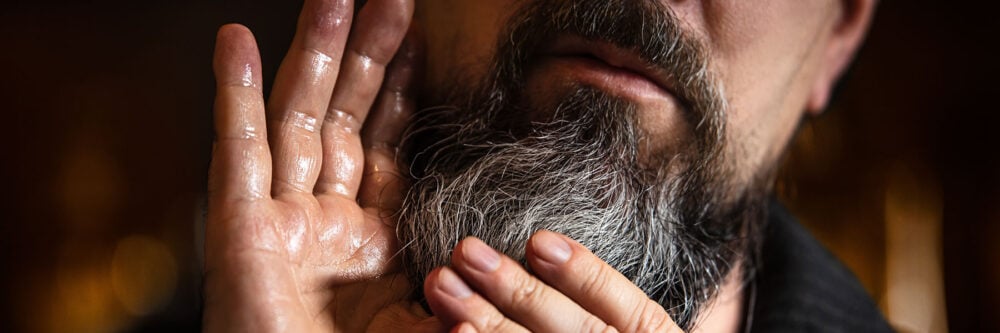
When the preparatory work is done, it is time for the actual application, and here it really pays to work with precision. To avoid a completely comprehensive or compact feel, it’s best to focus your beard color primarily on the areas where the gray hairs are actually most visible. By working strategically instead of just smearing the product all over, you preserve the beard’s natural shifts and depth.
Use the included applicator brush or a dense, smaller brush to gain full control over where the product ends up. Start with the areas where the grey is most prominent, which is often around the chin area or along the sideburns. Brush the product in with short, gentle sweeping strokes so that each strand is covered from root to tip without pressing too much color into the skin underneath.
Work in the product for an even result
It is important that you work systematically through the beard so that no section is forgotten or gets a disproportionately thick layer. A good rule of thumb is to comb through the area lightly after applying the product to distribute it evenly between all the hairs. By using the right amount of beard dye, you reduce the risk of runny or dark spots forming on the skin of your face.
If you happen to get color outside the beard line, it’s best to wipe it off immediately with a damp cotton ball or a piece of paper. The longer the product stays on the skin, the more difficult it will be to remove afterwards. Therefore, keep an eye on the contours throughout the process to ensure you get clean, neat lines around the cheeks and neck.
Precision and patience for the best feeling
Once you’ve covered the grey areas, you can gently smooth out the transitions towards your naturally coloured beard hairs. This makes the end result look significantly softer and prevents sharp, obvious color boundaries from appearing. Once the entire beard has been treated with your beard color, you are completely ready to let the product work for the time required.
Step 3: Keep track of the application time and rinse
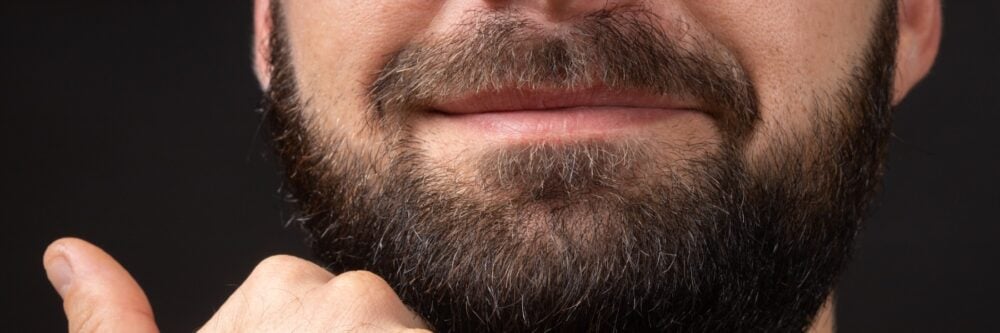
Now you have come to the final and crucial step to nail the final result. Once you have applied your beard color, it is the time that determines how intense and opaque the color actually becomes. It’s always safest to keep a close eye on the clock, as just a few extra minutes can make a big difference to how dark your beard feels.
For as discreet and natural a result as possible, it can often be wise to rinse out the product a little earlier than what is stated in the instructions for use. For example, if the recommendation is five minutes, you can choose to rinse after just three to four minutes on the first occasion. This way you preserve some of the natural shifts while avoiding your beard color becoming too dark or sharp.
Rinse out the product thoroughly
When the effect time is over, it’s time to rinse everything thoroughly in the sink or shower. Use plenty of lukewarm water and gently massage through the entire beard to remove any excess color residue. Continue rinsing until the water that runs out of the beard is completely clear and free of color pigments.
Feel free to use a mild beard shampoo when rinsing out to be absolutely sure that no product residue remains on the beard base. This also helps to neutralize the process and prevents the skin from becoming irritated or the color from continuing to darken after you have finished rinsing.
Finish with care for the best feeling
After you’ve towel-dried your beard gently, it’s time to moisturize both the hairs and the skin underneath. The application of beard dye can sometimes dry out the hairs slightly, so always finish with a few drops of nourishing beard oil or a softening beard balm. It gives your beard a fantastic luster, makes it soft and makes your new, fresh color look completely natural.
Frequently asked questions and answers about beard color
1. How do I choose the right shade for my beard color?
Answer: Always choose a shade lighter than you think you need. It is much easier to dye your beard again if you want a darker result, than to try to mute a color that has become too dark or sharp.
2. How long does beard dye last?
Answer: It depends on the type of color you use and how fast your beard grows. Permanent beard color or tinting usually lasts for 2 to 4 weeks before the growth begins to show or the color is gradually washed out.
3. Can I use regular hair dye in my beard?
Answer: No, it is not recommended. Beard hairs are significantly coarser than the hair on the head, and the skin on the face is more sensitive than the scalp. Beard color is specially formulated to penetrate coarse hairs and to be gentler on the facial skin.
4. How do I avoid my beard color looking artificial or painted?
A: For a natural result, focus the color primarily where the gray hairs are visible, rather than saturating the entire beard. Choose a lighter shade and rinse out the product 1-2 minutes earlier than the instructions for the first time.
5. Does beard dye completely cover all gray hair?
Answer: Yes, if you leave the color on for the entire recommended time, it will completely cover the gray hairs. If you’d rather have a “salt & pepper” look, just rinse out the paint a little earlier.
6. How do I prevent color stains on the skin under the beard?
Answer: Lubricate the skin along the beard lines with a little petroleum jelly or a greasy cream before you start. Use a dense applicator brush to keep you in control, and wipe away any paint that gets on your skin directly with a damp cotton ball.
7. Can you be allergic to beard dye?
Answer: Yes, some people can react to color pigments (such as PPD). Always do a simple prick test on the skin (for example, on the inside of the elbow or behind the ear) 48 hours before dyeing your beard for the first time.
8. Does beard dye damage my beard or make it dry?
Answer: Chemical dyeing can dry out the beard hairs slightly. Therefore, it is important to always wash out the color thoroughly and finish the treatment with a moisturizing beard oil or beard balm to preserve the softness and luster of the beard.
9. How often do I need to dye my beard again?
Answer: Most people need to touch up their color about every two to three weeks, depending on how quickly your beard grows and how often you wash it with shampoo.
10. Can I dye my beard if I have a short beard or stubble?
Answer: Yes, it is fine, but it requires more precision so that you do not stain the skin underneath. Using a very small brush, gently apply the product to the surface of the bristles.


