

What suits your beard best?
Choosing the right safety razor for a really coarse beard growth can feel like a jungle, especially when the standard razor simply isn’t enough. Both the Slant Bar and the Open Comb are built to make the process smoother, but they tackle the coarse beard in completely different ways. While an Open Comb uses an open comb to guide in and shave off dense beard hairs without clogging, a Slant Bar provides a guillotine-like cutting angle that cuts through the hardest hairs with ease.
But which planing head is actually best for your needs and your skin? In this article, we’ll go over the differences so you can find the perfect razor for a closer and more comfortable shave.
Executive summary
Cutting technique and angle (Bevel cut vs. straight cut)
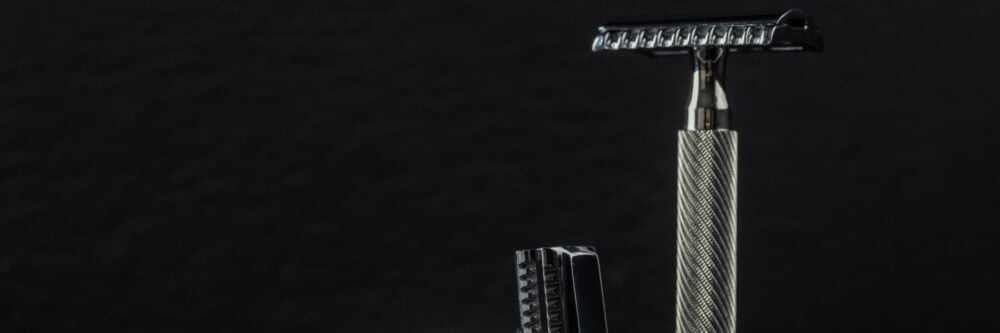
The Slant Bar angles the blade obliquely so that it cuts off the beard hairs with a guillotine setting, reducing drag. The Open Comb cuts straight on, but uses the comb to guide the straws correctly.
Handling long and dense beard hairs
The Open Comb has open channels that let through a lot of stubble and lather volume without clogging, making it superior if you shave less often. Slant Bar is best suited for shorter but extremely coarse beards.
Built-in skin protection and exposure
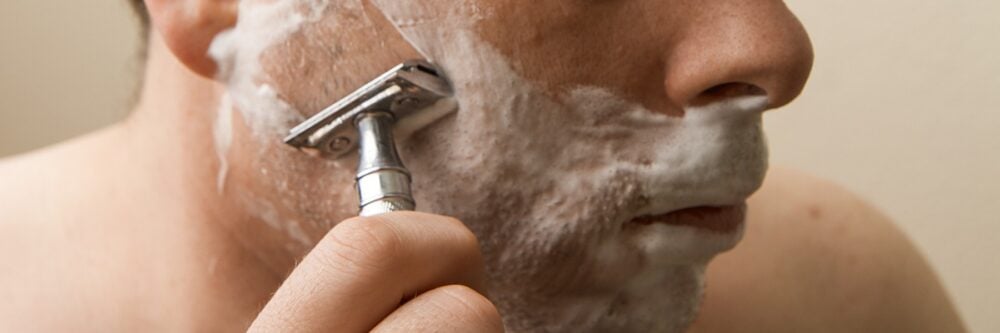
The Slant Bar often has a closed comb under the angled blade that stretches the skin and provides extra protection. Open Comb has the blade more exposed directly against the skin, which requires more precision.
Sensation against the skin (Aggressiveness)
An Open Comb generally feels more direct and aggressive against the skin due to the open teeth. A Slant Bar provides an extremely effective shave, but often feels gentler on the skin than it actually is.
Lather flow and cleaning during shaving
The teeth of an Open Comb allow shaving foam and severed hairs to be easily transported away while you shave. Slant Bar collects more foam in the comb and requires you to rinse the razor a little more often during the step.
Cutting technique and angle (Bevel cut vs. straight cut)
When it comes to the purely mechanical difference between a Slant Bar and an Open Comb, it all comes down to how the blade actually meets the beard shaft. The traditional safety razor cuts the straw straight off at a 90-degree angle, which requires quite a bit of force when the beard growth is really rough and stiff. To make shaving easier and reduce the risk of the razor sneezing or getting stuck in the beard, both types of razor have developed completely different solutions to the same problem.
The guillotine head that shaves the beard
Slant Bar uses a clever physical principle that is often compared to a guillotine. By turning or angled the razor head, the razor blade is forced into an oblique position. This means that the blade does not meet the beard stalk straight from the front, but at an oblique angle that cuts through the stalk rather than “chopping” it off. This slanting reduces drag dramatically, which means that you need to apply significantly less pressure to get through a covering and coarse beard.
The Open Comb takes a completely different route and retains the classic, straight cutting angle. Here, the focus is instead on preparing and sorting the beard hairs just before the leaf reaches them. The open comb has clear teeth that work much like a sparse comb. When you pull the razor over your face, it lifts and separates the individual hairs, while guiding them in a straight line towards the edge of the blade for the cleanest and most distinctive cut possible.
The precision comb that sorts the straws
Thanks to the reduced friction that the Slant Bar achieves with its guillotine effect, many people find that the shave feels unusually soft. Fewer strokes are simply needed to achieve a smooth shave, which spares the skin from unnecessary irritation. This means that you get the power of a highly efficient planer without the blade having to feel brutally aggressive against your face.
The Open Comb, on the other hand, requires a slightly more controlled hand because the blade cuts straight on without the relief of the oblique. However, the ability of the teeth to align the bristles means that you get amazing precision and a very direct contact with the skin. In summary, the choice here comes down to cutting dynamics: do you want the blade to cut the straw at an angle like a sharp pair of scissors (Slant Bar), or do you want a comb to align the blade so that the blade can cut it straight off with maximum precision (Open Comb).
Handling long and dense beard hairs
How often you shave and how long your beard has time to get between shaves play a crucial role in which razor head performs best. A coarse beard that has been allowed to grow for a few days or a week places completely different demands on the flow of hair and lather than a day-old stubble does. This is where the difference in construction between an Open Comb and a Slant Bar becomes most evident in practice.
The open comb’s free tickets for stubble
The Open Comb is the undisputed king when it comes to managing longer beard growth. Since the shaving head lacks a full comb under the blade and instead consists of open teeth, large channels are created where both cut hairs and shaving foam can pass freely. This means that the razor almost never gets clogged, no matter how much beard or lather you sweep with you in one and the same stroke.
For those of you who shave twice a week, once a week or less often, this means that you do not have to stop and rinse the razor after each short stroke. The Open Comb effectively disposes of the beard mass so that the blade has a clear view at all times and can work unhindered against the skin. The result is a fast, smooth and jerk-free shave even when you need to take down a proper growth.
The powerhouse for short and rock-hard beards
The Slant Bar works differently because it usually has a closed safety frame, even if it is angled. This means that the lather and the cut straws do not have the same free passage paths as in an Open Comb. If you’re trying to get through a beard several centimetres long with a Slant Bar, the gap under the blade will quickly fill up, requiring you to rinse the razor significantly more often during the shave.
Where Slant Bar shines instead is on shorter, but extremely dense and coarse beards. When the stump is only a couple of days old but feels hard as wire, you don’t need the open channels in the same way. Instead, you benefit from the Slant Bar’s oblique cutting angle that cuts through the hard stumps with ease. In short: choose Open Comb for long and dense beards that are rarely shaved, and Slant Bar for short but extremely hard beards that are shaved regularly.
Built-in skin protection and exposure
How a safety razor actually feels against the face is largely about the difference between actual effectiveness and emotional aggressiveness. One shaving head can cut an extreme amount of beard without feeling much against the skin, while another gives a clear, almost sharp feeling with every stroke. In this particular experience, Slant Bar and Open Comb differ in a very interesting way.
When open teeth provide a direct leaf skin contact
An Open Comb is almost always associated with a higher sense of aggressiveness. Because the teeth leave gaps where the blade is completely open to the face, you get very clear and direct feedback. You can feel exactly where the edge is working against the skin, which gives incredible control but also a feeling that the shave is a little more “raw” and unpolished.
For many people with coarse beard growth, this direct contact is appreciated because you can immediately feel when the beard gives way. At the same time, the open construction means that the skin is exposed to a more merciless blade, which requires you to be light on the hand. If you press too hard with an Open Comb, the skin quickly reminds you in the form of red dots or a burning sensation afterwards.
The efficient wolf in sheep’s clothing
Slant Bar works in a completely opposite way and is often described as a wolf in sheep’s clothing. Thanks to the slanted guillotine effect and the closed safety frame, the blade cuts through the toughest straws with minimal friction. The result is a shave that feels surprisingly gentle and comfortable against the skin, while at the same time removing coarse beards in a way that few other razors can manage.
This illusion of gentleness makes Slant Bar a favorite among men with both coarse beards and sensitive skin. You get the power of an extremely efficient planer, but avoid the sharp feeling of a detached blade against your face. This allows you to achieve a perfectly smooth shave without your skin having to pay the price of irritation and burning.
In conclusion, the choice comes down to which experience you prefer in the bathroom mirror: do you want the clear, direct feedback and direct contact of an Open Comb, or do you prefer the Slant Bar’s smoother running that hides a huge cutting force beneath the surface?

Sensation against the skin (Aggressiveness)
One aspect that is often forgotten when comparing razor heads is how they handle the flow of shaving foam and cut beard hairs during the actual shave. A good lather flow is not just about cleanliness, but has a direct impact on the razor’s glide, the effect in every stroke and how smoothly the entire shaving routine flows in front of the mirror.
The natural flow of the open structure
The Open Comb is absolutely superior when it comes to transporting shaving foam and stubble away. The teeth on the underside of the planer head act as drainage channels, actively diverting excess foam and hairs from the blade’s edge while you pull the razor over the skin. Instead of collecting the foam in front of it, the teeth let it through, allowing the blade to retain its maximum cutting ability throughout the stroke.
This continuous flow means you can make long, uninterrupted strokes without the razor losing contact with the skin or the blade floating on top of a blanket of collected foam. For those who like to work with a really thick and rich shaving foam, this is a huge advantage, as the Open Comb is never stopped by a lot of product.
The safety chamber’s collecting function
The Slant Bar, which usually has a closed safety frame, works in a completely different way when it meets the lather. The covered comb under the blade collects the shaving foam and the cut hairs in the notch behind the frame edge. While this helps lubricate the skin right at the cut, it also means that the razor head fills up significantly faster during the shave.
When the groove is filled with thick lather and dense beard hairs, the razor’s efficiency decreases, which means that you need to rinse it more often under running water. It’s not a big deal in practice, but it does require a slightly more interrupted pace where you have to dip or rinse the razor after just a couple of strokes to keep the blade completely clean and sharp-eyed.
Ultimately, the difference in cleaning and lather flow boils down to your own shaving pace: do you want an Open Comb that swallows unlimited lather and allows you to shave on without interruption, or would you like to rinse your Slant Bar a little more often in exchange for its unique oblique guillotine technology?
Safety razors with open comb
-


-


-
Utgående


-
Utgående

