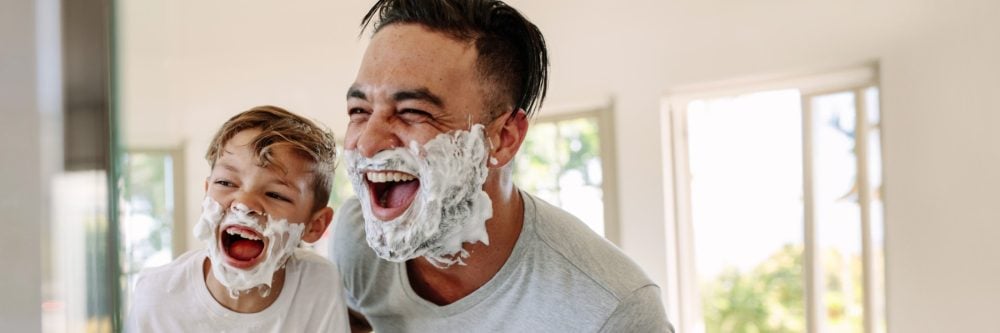
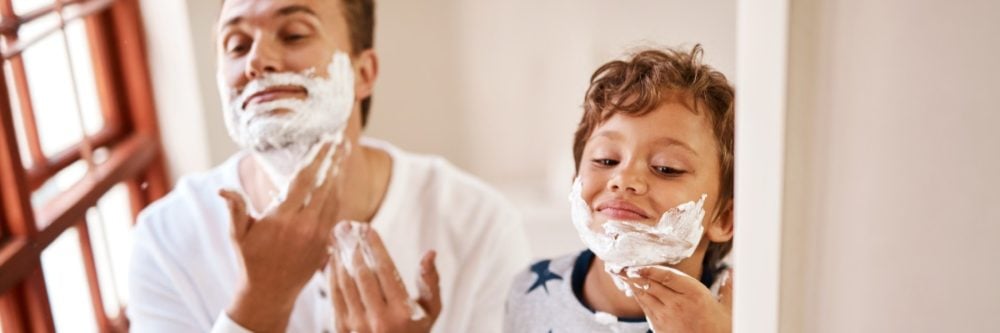
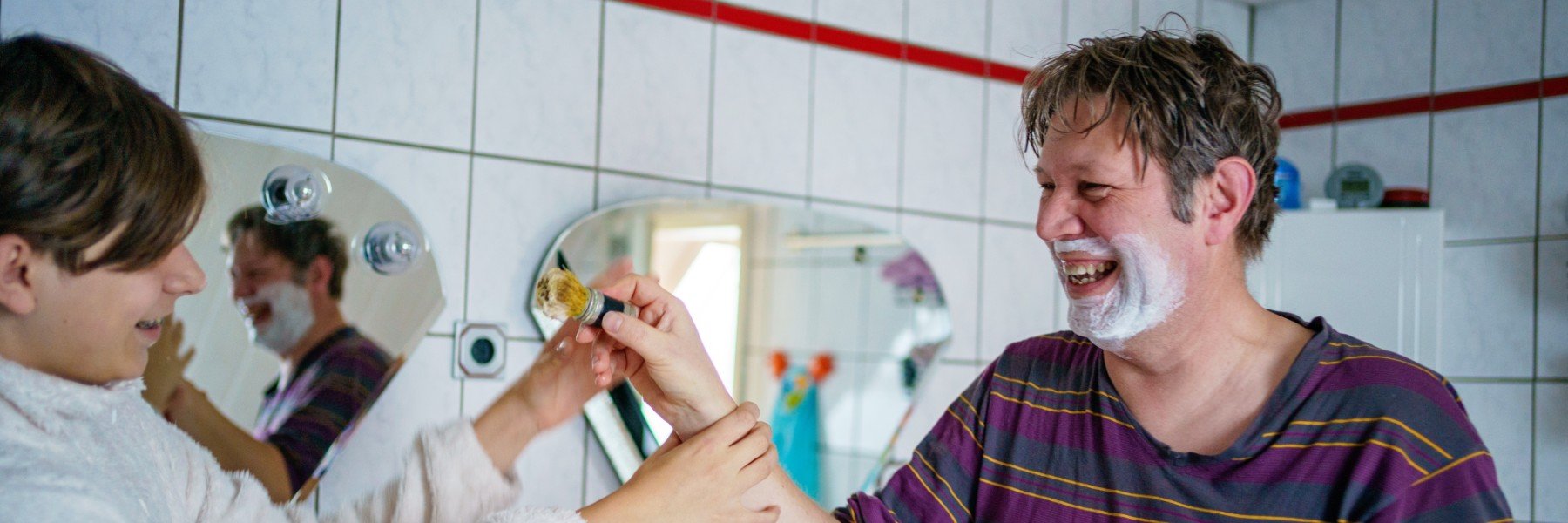
It often starts with a glance in the mirror and a comment about the “fjun” on the upper lip or the need to shave your legs before swimming practice. For a teenager, the first shave is a milestone – a sign that they are becoming an adult. For you as a parent, it is a golden opportunity to pass on a skill that lasts a lifetime.
But how do you actually make the first experience positive, safe and free of red dots? Here’s our definitive guide on how to introduce the next generation to the art of wet shaving.
Why Classic Wet Shaving Is Best For A Teenager
Many young people are attracted by cheap disposable plastic planers or expensive multi-blade systems from the grocery store. However, for a teenager with sensitive skin and hormonal changes, these can often cause problems. Multi-bladed razors pull on the hairs and cut below the skin surface, often leading to the dreaded “red dots”.
By introducing a safety razor, your teen learns to respect their skin. It is a one-time investment that provides a gentler shave and is also significantly better for the environment.
1. Preparation: Create a safe bathroom routine
Before the razor even touches the skin, preparation is crucial. A teenager is often in a hurry, but here it is important to teach patience.
Soften the skin: The best thing to do is to shave immediately after a hot shower. The heat softens the hairs and makes the razor glide more easily.
Cleanser: Use a mild face wash. For a teenager with acne, it is especially important that the skin is clean to avoid spreading bacteria with the razor.
Pre-shave: Show how a pre-shave cream or oil acts as a protective layer between the skin and the blade.
Choosing the Right Time for a Teenager
When it comes to a teenager and shaving, timing is everything. It’s not just about when the first stubble appears, but about when the child themselves starts to show interest or experience discomfort about their hair growth. As a parent, you can look out for signs, but let the initiative come from the teenager. By waiting for the right moment, you ensure that the child is motivated to learn the technique properly, rather than just seeing it as another requirement in the morning routine.’
Create a safe environment without stress
The first encounter with a sharp blade can be associated with some anxiety. To make the experience positive, it’s important to create a stress-free environment. Choose a time, preferably a weekend morning, when you do not have any times to fit. Show your teenager that shaving takes time and that precision is more important than speed. By de-dramatizing the process and showing how to handle the tools safely, you reduce the risk of shaky hands and unnecessary small wounds.
2. Choosing equipment: The perfect starter kit
When learning to shave from scratch, you need the right tools. Here’s what we recommend for a beginner.
Investing in the Right Starter Kit: The Tools That Make the Difference
When learning to shave from scratch, you need the right tools. It’s easy to think that a disposable planer is the easiest way in, but the fact is that the right equipment not only gives a better result but also a safer experience. For a teenager, it’s about building a habit with tools that work with the skin, not against it. Here’s what we recommend for a beginner:
The gentle safety razor
Choose a planer with a “closed comb”. It hides more of the blade and is extremely forgiving. It’s the perfect entry point for a teenager who is afraid of cutting himself.
A metal safety razor also provides a natural weight that teaches the user not to press the razor against their face – one of the most important lessons for a gentle shave. Unlike lightweight plastic planers, this allows the tool’s own weight to do the work, minimizing the risk of irritation and cuts.
Whipping up your own lather with a shaving brush makes the experience more enjoyable. For young people, we recommend a synthetic brush; They are soft, dry quickly and require no maintenance. The shaving soap provides a much better glide and protection than ready-made foam in a can.
The shaving soap in turn provides a much better glide and protection than ready-made foam in a can. While canned foam often contains drying substances, a good shaving soap is filled with moisturizing ingredients that create a protective film. For a teenager with hormonal skin or acne-prone skin, this is especially important, as the protective lather reduces friction and helps to keep the skin intact and healthy throughout the process.
When you’re guiding a teenager through their first shave, the pedagogy is simple but important. Focus on explaining the direction of hair growth and the importance of a good glide. Instead of just giving them a razor and hoping for the best, go through the steps step by step: how to soften the skin with warm water, how to apply shaving soap and how to make the first, short strokes. It builds a self-confidence that they take with them every time they stand in front of the mirror in the future.
The three most important parts
Here are the three most important parts you as a parent should teach your teenager:
No pressure – Let gravity work Unlike a lightweight plastic razor, which requires you to press the blades against the skin for them to bite, a safety razor should only rest against the skin. One of the most important lessons for a teenager is to understand that the weight of the razor itself is sufficient.
Why is it important? Pressing a safety razor against your skin creates unevenness that the blade can get stuck in, leading to cuts. By simply guiding the razor with a feather-light grip, you minimize friction and allow the blade to cut the hairs without scratching the skin.
The angle – Find the “magic” mode Hold the razor at an angle of about 30 degrees to the skin. Unlike modern cassette planers that have a movable head that adjusts the angle automatically, a safety planer is static.
How to teach it? A good tip for a beginner is to put the head of the razor flat against the cheek so that the handle sticks straight out. Then, slowly angle the handle downwards until you feel the blade make contact with the hair. There you have the perfect angle. Keeping this angle constant throughout the stroke is key to an irritation-free shave.
Hair Direction (Mapping) – Get to Know Your “Beard Map” Before you even start lathering, you should teach your teenager how to do a so-called “mapping”. This involves dragging your fingers over the stubble to feel which way the hair grows on different parts of the face or body.
Why hair is safest? During the first period, you should only shave with the hair. This means that you pull the razor in the same direction as the hair grows. Shaving against the hair directly is by far the most common cause of razor burn, red dots and ingrown hairs in beginners. Only when the skin has gotten used to shaving and the technique is in place, can you start to explore shaving from other angles.
It is more the rule than the exception that a teenager has pimples, blackheads or generally uneven skin during puberty. This places higher demands on both technique and sensitivity. When shaving on an unbalanced skin, the goal is to remove unwanted hair without aggravating ongoing inflammation.
Protect the skin – Never “shave through” inflammation
Teach your teenager never to shave directly over an active pimple or a red inflammation. Shaving “through” a pimple involves cutting off the top of an infection, which not only leads to bleeding but also risks spreading bacteria over the rest of the face. In the worst case, it can lead to permanent scarring.
Strategy
Show how to gently shave around the most exposed areas. It is better to leave a few millimeters of stubble around a pimple than to damage the skin. Over time, you learn to operate the planer with precision to avoid the most sensitive points.
Hygiene as protection – Change razor blades often
Good hygiene is essential to keep the skin calm and prevent new outbreaks. A used razor blade quickly accumulates skin residue, sebum and bacteria.
The importance of sharp blades
For a teenager with acne, it is especially important to change the blade often – preferably after every two or three shaves. A dull blade pulls on the skin and creates microscopic wounds where bacteria can take hold.
Cleaning the planer
Show how to rinse the razor thoroughly in hot water between strokes and how to clean it after shaving to be completely free of soap residue and dirt for next time.
Customized products for problem skin
When shaving on acne-prone skin, avoid products with heavy oils that can clog pores.
Gentle cleansing
Always start with a face wash adapted for teenage skin to remove excess oil before shaving.
The role of the alum diocese
If you accidentally tear open a pimple, the alum stick is the savior in need. It has a pore-tightening and antiseptic effect, stopping bleeding immediately and disinfecting the small wound so that healing is faster.
Shaving is actually a form of mechanical exfoliation. When the blade is pulled over the skin, not only the hairs are removed, but also the outermost layer of dead skin cells. This makes the skin extremely smooth, but also extra sensitive and susceptible to both moisture and bacteria immediately afterwards. For a teenager, this is the most critical step to avoid irritation and discomfort.
Cold water – Nature’s own pore tightener
Once the shave is complete, the first step is to rinse your face or shaved area with plenty of cold water.
Why it works?
During shaving, warm water and steam have opened up the pores and softened the skin. The cold water provides a refreshing shock that helps the pores tighten and soothes any swelling or redness. It acts as a natural reset that soothes the skin after contact with the steel.
After Shave Balm – Moisture instead of burning
Forget the old movies where men pat on alcohol-based shaving water and scream with burning. For a modern teenager, a moisturizing After Shave Balm is a significantly better choice.
Choose the right product?
Avoid strong, alcohol-based products that dry out and irritate an already sensitive teenage complexion. A good balm acts as a moisturiser that goes deep, restoring the skin’s natural barrier and leaving it soft and elastic.
Long-term effect
By moisturizing immediately after shaving, you reduce the risk of the skin starting to overproduce oil (which is otherwise common with dehydration), which in turn counteracts new outbreaks of pimples.
Even the most cautious beginner will sooner or later suffer a small “nick” or a cut. Here, the alum pin is an indispensable tool in the bathroom cabinet.
Stops the accident immediately
If an accident occurs and a small wound occurs, moisten the top of the alum stick and press it against the wound. It stops bleeding immediately through its astringent effect.
Antiseptic properties
In addition to stopping the blood, the alunet has a disinfecting effect. This cleans the wound and reduces the risk of it becoming infected or leaving red marks. It’s the fastest way to look “freshly shaved and fresh” even if you’ve had a small mishap with the razor.
Giving a shaving set to your teenager is more than just a practical gift – it’s a symbol of trust and maturity. It turns an everyday chore into a moment of self-preservation and pride.
By taking the time to guide your teen through their first shave, you’re not only giving them smooth skin, but also the confidence to take care of themselves in the best way.
Shaving as a common tradition
Teaching shaving is more than just a practical instruction; It’s a way to socialize and share experiences. It is in these moments, in the midst of the lather and the smell of after shave, that the really good conversations often occur. By making this a joint activity for the first few times, you’ll be laying the foundation for a healthy skincare routine that your teen will carry with them as a positive memory from growing up.
ShavingWall is Shavingroom.se blog that covers classic wet shaving and beard care in three different departments.
Shaving blog where we bring up news and tips in wet shaving and beard care.
ShavingBrand where we present a brand once a month.
ShavingTest where we test different products.
At Shavingblogg, we talk about everything that has to do with wet shaving and beard care
Wet shaving means shaving with a safety razor, shavette or razor together with a shaving brush and shaving cream or shaving soap. What should you consider when buying your first safety razor, shavette or razor? What type of shaving brush should you choose? Should you choose shaving cream or shaving soap?
Beard care means caring for your beard and mustache. Is beard oil good for your beard and why should you choose it? Which mustache wax is right for you? Do you really need a beard shampoo? Time to start thinking about beard color.
We like both classic traditional timeless brands and new exciting brands from all corners of the world. You can read about these in ShavingBrand.
We don’t just think it’s fun to sell the stuff. We also use them and test them to say what we think of them.
Free Shipping
On orders above €189
Fast Delivery
2-5 day delivery
Same Day Dispatch
On orders before 12:00
Secure Payments
Klarna / Swish / MasterCard / Visa
Switching language?
You've switched the language and there are items in the cart. If you keep the English language, the cart will be emptied and you will have to add the items again to the cart.